Gardening Spitalfields — Recycling and Sustainability
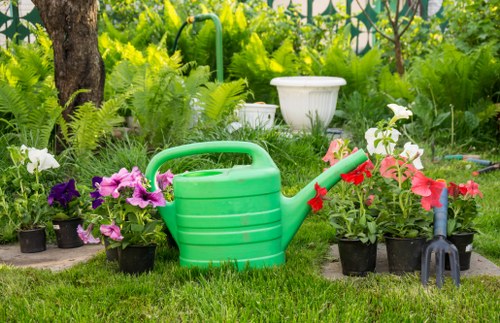 Gardening Spitalfields is committed to creating an eco-friendly waste disposal area and supporting a resilient sustainable rubbish gardening area across Spitalfields and nearby neighbourhoods. Our approach balances practical on-site sorting with neighbourhood-scale solutions, encouraging residents and gardeners to reduce landfill, increase reuse and composting, and support the borough's greener waste systems. We aim to remodel how garden waste and mixed rubbish are handled so that every patch of soil benefits from lower emissions and better resource recovery.
Our local strategy aligns with the boroughs' approach to waste separation: separate food and garden waste streams, clear dry mixed recycling, and targeted reuse for bulky or hazardous materials. By mirroring council-led collections and adding on-site separation points, we provide a reliable bridge between household/communal gardening waste and municipal services. This helps volunteers, tenants and small businesses make correct sorting choices and reduces contamination of recycling loads.
 To measure progress, Gardening Spitalfields has set a clear recycling percentage target: reach a 65% combined recycling and composting rate by 2030. That target covers diverted organic compostables, salvaged planting materials, reusable tools and pots, and clean dry recyclables diverted from the residual stream. Hitting this will require steady improvements in local reuse, participation in borough schemes and efficient logistics for green waste collection.
Low-Carbon Collection Fleet and Logistics
We operate a small fleet of low-carbon vans and cargo bikes designed to serve the eco-friendly waste disposal area and the sustainable rubbish gardening area simultaneously. Our low-emission vans are predominantly electric, and route planning is optimized to minimise mileage and idling. Where access is tight in the Spitalfields lanes, cargo bikes and electric trikes complete short hops to transfer hubs, reducing noise and air pollution.Local transfer stations and transfer points
We work with nearby transfer stations — including borough transfer stations and municipal depots — to ensure green waste and recyclables are accepted and processed correctly. Regular runs to Tower Hamlets transfer facilities and neighbouring borough depots help us consolidate loads for composting, anaerobic digestion and material recycling. This ensures that material collected from the sustainable gardening waste area doesn't become residual waste at the end of the chain. To reduce carbon footprint further we prioritise full-load pickups, scheduled micro-depots, and drop-offs at transfer stations during off-peak hours. Combining our small vehicles with borough-level consolidation reduces the number of larger lorry movements through the neighbourhood and supports a low-carbon circular loop for garden organics and reusable garden items.
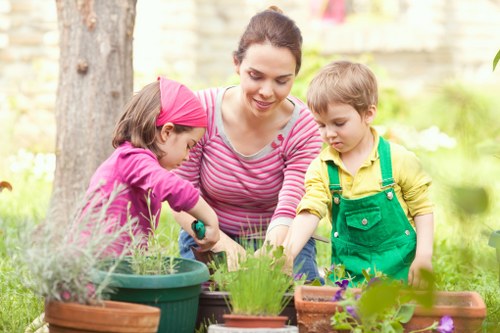 Partnerships with charities and community groups are central to our reuse-first policy. We collaborate with local charities, community reuse hubs and social enterprises to divert usable pots, soil, tools, and wood from the waste stream. These partnerships enable items recovered from community clear-outs or garden refurbishments to be given a second life — reducing new purchases and supporting local social projects.
Our programme works with food redistribution charities when food waste is encountered in community gardens, and with reuse networks for items like plant stands and bench slats. Working closely with charity partners allows Gardening Spitalfields to deliver social as well as environmental benefits, while also keeping the sustainable gardening waste area focused on high-value resource recovery rather than disposal.
 Implementation relies on clear on-site signage, volunteer training and simple contingencies for contaminated loads. We provide labelled bays for:
- Garden organics (compostable plant material and woody cuttings)
- Dry recycling (paper, cardboard, clean plastics and metals)
- Reuse and salvage (pots, tools, timber suitable for repair)
Monitoring progress is critical: we report monthly tonnages of diverted organics and reused goods, mapping them back to our recycling percentage target. When items cannot be reused locally, we make sure they are routed through the correct local transfer stations and council-managed facilities so they are processed in the most sustainable way available. This transparent tracking helps us refine the eco-friendly waste disposal area and the sustainable rubbish gardening area over time.
Education and community engagement are core to our success. Through short, practical sessions we encourage gardeners and residents to adopt low-waste planting practices, prioritise durable materials, and think in terms of repair and reuse. These behavioural shifts are just as important as infrastructure: an engaged community increases participation rates and reduces contamination at the point of collection.
We are proud to be evolving Gardening Spitalfields into a local exemplar for low-carbon, circular waste handling in urban gardening. By integrating small electric vans, efficient transfer station routing, and strong charity partnerships, the project delivers a measurable reduction in landfill and in transport emissions while building a healthier, more resource-conscious neighbourhood green infrastructure.